Table of Contents
The most common thing a parent says to us around November is some version of: “Her teacher asked what changed.” Not “she can kick higher now.” Something changed in how the child sits, listens, waits her turn, and starts her work. After thirty years of running dojos across Bucks and Montgomery County we have heard it enough times to stop being surprised by it. What did surprise us, when we finally sat down and read the research, is how closely what scientists have measured matches what teachers keep noticing.
This post is the evidence, laid out plainly. We have kept to studies we could read in full, we quote the numbers as published, and we are honest about what the research does not show. If you are deciding whether a martial arts class is worth a spot in your family’s fall schedule, this is the case, with citations.
The Short Version
Across randomized studies of children as young as five, traditional martial arts training has been linked to better attentional control, better classroom conduct, stronger self-regulation, improved balance and coordination, higher resilience and confidence, and, in the largest trial ever run, a small but real improvement in grades. The effects are strongest in kids who start out struggling to focus, and they show up in programs that teach respect and self-control alongside technique. That last part matters, and we will come back to it.
Attention and Self-Control: What the Randomized Studies Found
The study that started this whole line of research was run in an American public elementary school and published in 2004. Researchers randomly assigned 207 children, kindergarten through fifth grade, to either three months of traditional martial arts classes or their regular PE period. At the end, the martial arts group showed greater improvement in cognitive self-regulation (the ability to stay focused rather than distractible), affective self-regulation (persevering rather than quitting), prosocial behavior, classroom conduct, and even performance on a mental math test (Lakes and Hoyt, 2004, Journal of Applied Developmental Psychology).
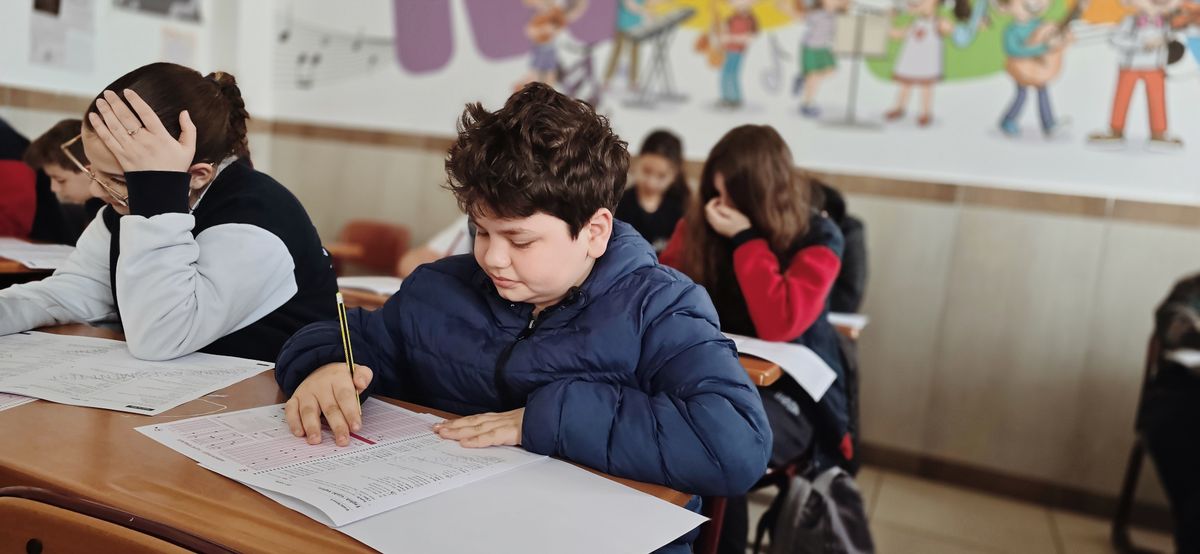
Seven years later, a review in the journal Science asked a bigger question: of everything anyone has tried, what actually improves executive function in children ages 4 to 12? Executive function is the umbrella term for focus, working memory, impulse control, and flexible thinking, and it predicts school success better than IQ does. The review’s list of interventions with real evidence behind them was short: computerized training, certain games, aerobic exercise, mindfulness, good school curricula, and traditional martial arts. Two of its conclusions are worth pinning to the fridge. First, the children with the weakest executive function at the start benefit the most. Second, programs work best when they build emotional and social skills together with physical ones, rather than one at a time (Diamond and Lee, 2011, Science).
More recent trials have kept finding the same pattern. In a UK randomized study of 240 children ages 7 to 11, an ordinary 11-week beginners’ course led teachers to rate the martial arts kids as having better attentional control and fewer conduct problems than the control group, and the children scored better on a standard test of executive attention. The kids also, in the researchers’ words, rated the classes “very positively” (Ng-Knight and colleagues, 2022, Developmental Psychology). A 2026 randomized trial of 7 and 8 year olds measured attention directly: after eight weeks of three classes a week, attention stability improved about 24 percent in the martial arts group versus about 5 percent in the control group (Song and colleagues, 2026, BMC Sports Science, Medicine and Rehabilitation).
In middle schoolers, a pilot randomized study found that adding two martial arts sessions a week to regular PE produced a large improvement in parent-rated inhibitory control, which is the plain-English skill of stopping yourself before you do the thing you were about to do (Lakes and colleagues, 2013).
What About Kids Who Really Struggle to Focus?
Parents of children with attention difficulties ask us this every week, so here is the honest state of the research. It is promising and it is early. An 18-month program for teenagers with ADHD produced large improvements in selective attention and inhibitory control (Kadri and colleagues, 2019). A three-month randomized judo program improved working memory in 8 to 12 year olds with ADHD, measured both behaviorally and with brain-wave recordings (Ludyga and colleagues, 2022). But the same research group later found that a 12-week program did not improve response inhibition in children with ADHD, even though it did in another group of kids (Ludyga and colleagues, 2023).
So we will not tell you martial arts treats ADHD, and you should be skeptical of anyone who does. What we will tell you is that the Science review’s finding, that the kids who start with the weakest focus gain the most, is consistent with what we see on the mat, and that a structured class is a reasonable thing to add alongside whatever your pediatrician and school have recommended, never instead of it.
Confidence and Resilience
“Confidence” is the word parents use most, and it is the hardest to measure, so researchers measure its cousins: self-efficacy, resilience, wellbeing, and anxiety. A meta-analysis pooling 14 studies found martial arts training had a small positive effect on wellbeing and a medium-sized effect on reducing anxiety and depression-type symptoms (Moore and colleagues, 2020). In a randomized trial of 283 students ages 12 to 14 in Australian schools, a 10-week program improved resilience and self-efficacy in the martial arts group while both measures declined in the control group over the same school term (Moore and colleagues, 2018 and 2021). A review of 27 studies on youth martial arts found most reported positive effects on personality traits and self-esteem, with longer training associated with higher self-esteem (Vertonghen and Theeboom, 2010).
The researchers are careful to note that some of these effects fade if the training stops; in the Australian study the gains were stronger right after the program than 12 weeks later. That matches our experience too. Confidence is a habit, not an inoculation, which is one reason our belt system is built around showing up consistently rather than cramming for a test.
Coordination, Balance, and Why It Matters for the Classroom
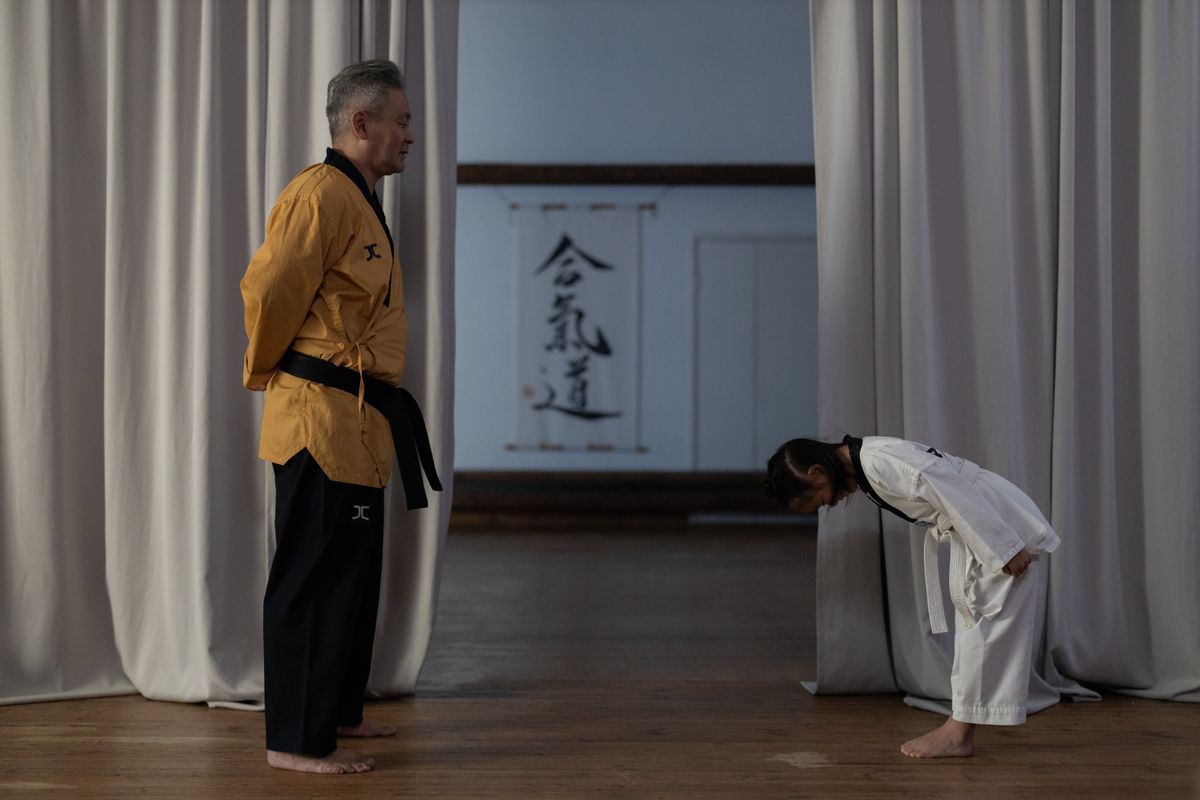
This one is less intuitive, so bear with us. A systematic review of 16 studies covering 1,615 children ages 4 to 13 concluded that martial arts programs improved cardiorespiratory fitness, speed, agility, strength, flexibility, coordination, and balance, with balance gains showing up clearly after year-long programs (Stamenkovic and colleagues, 2022). A randomized trial of 5 and 6 year olds found measurably better balance and overall motor scores after just ten weeks of two 30-minute sessions a week (Li and colleagues, 2022). And a 2026 review of programs for children with developmental coordination disorder found consistent improvements in motor competence, balance, strength, and coordination, with no adverse events reported in any study (Olhos and colleagues, 2026).
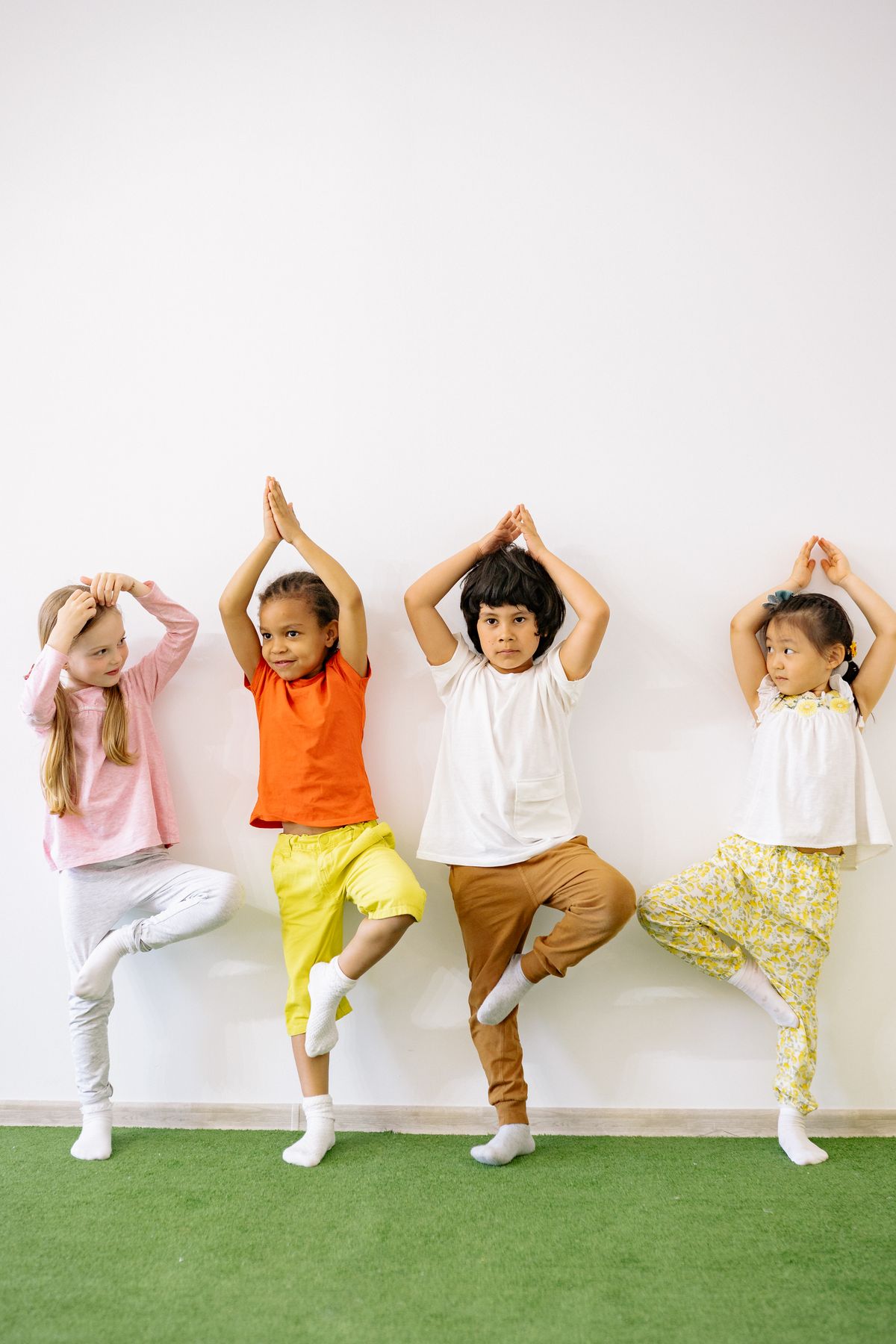
Why does a parent worried about focus care about balance? Because a child who is physically comfortable in her body spends less of her attention managing it. Sitting upright for forty minutes, holding a pencil correctly, lining up without bumping the kid in front: these are motor tasks before they are behavior tasks. Kids who train regularly get better at the physical side, which frees up attention for everything else.
Does It Actually Show Up in Grades?
Here is the biggest and most careful study on the question. Researchers ran a one-year cluster randomized trial across 20 schools in five European countries, 721 second-graders in total, replacing regular PE with a karate program in half the schools. At the end of the year the karate schools showed small but statistically significant gains in average grades and in conduct, along with better balance and cardiorespiratory fitness. The grade effect was modest, and we want to be straight about that. The more interesting finding was in the follow-up analysis: the academic benefit was concentrated in the children who had psychosocial difficulties or lower grades to begin with (Pinto-Escalona and colleagues, 2024, Journal of Sport and Health Science). Once again, the kids who needed it most got the most out of it.
The wider research on physical activity and school points the same direction. The American College of Sports Medicine reviewed 137 studies on children ages 5 to 13 and concluded that the majority support physical activity benefiting children’s cognitive functioning, with no evidence that more activity hurts grades (Donnelly and colleagues, 2016). A review of 50 studies on school-based physical activity found that half of all measured associations with academic performance were positive and only 1.5 percent were negative (Rasberry and colleagues, 2011). The American Academy of Pediatrics recommends 60 minutes of moderate to vigorous activity most days for kids six and up, and lists “helps students focus in school” among the reasons.
The Part Most Articles Skip: How It Is Taught Matters
If you only take one thing from the research, take this. The benefits above come from traditional martial arts training, meaning classes where respect, self-control, and character are taught deliberately alongside technique. The clearest demonstration is a 1986 study of at-risk teenagers: the group trained in a traditional program, with its philosophy and mental discipline intact, showed lower aggression, lower anxiety, and higher self-esteem after six months, while a group taught the fighting techniques alone showed a large increase in aggression (Trulson, 1986). A 2026 review of eleven longitudinal studies reached the same conclusion in modern language: the benefits are “conditional on educational goals, pedagogical guidance, and training context,” and strongest when training includes “non-violence norms” and “supportive pedagogical guidance” (Deng and colleagues, 2026). A meta-analysis of 12 youth studies found a significant reduction in aggression and its authors noted that what mattered was the repetitive movement, controlled behavior, and respect, not any particular style (Harwood and colleagues, 2017).
This is why every kids’ class at East West follows the same structure: warm-up and stretching, fundamental strikes and blocks, forms for body control, partner drills, age-appropriate controlled sparring, and a cool-down with a character lesson. The character lesson is not a nice extra at the end. According to the research, it is the ingredient that makes the rest of it work. The six words on our dojo walls, Modesty, Courtesy, Integrity, Self Control, Perseverance, and Indomitable Spirit, are standards we hold students and instructors to starting on day one, and the studies suggest that is exactly the right place to put them.
What a Class Actually Trains
Reading the research, you can map each finding to something that happens in a normal hour on the mat:
- Sustained attention. A student has to watch the instructor, hear a count, and reproduce a technique in sequence. Forms are, in effect, attention exercises with a physical output.
- Impulse control. Controlled sparring is the purest version: you are allowed to move, but only in the way the rules permit, at the intensity your partner can handle. Stopping on command is drilled constantly.
- Working memory. A form of twenty moves has to be held in the head and executed in order. New moves get added to old ones every few weeks.
- Delayed gratification. Every student starts at white belt. Advancement is based on skill and readiness, not time served. Kids learn that the stripe comes when the technique is right, and not before.
- Bilateral coordination and balance. Kicks are performed on one leg. Blocks and strikes alternate sides. Stances demand a stable base under motion.
- Confidence under observation. Testing in front of the class, and in front of parents, is a rehearsal for every presentation and tryout that comes later.
What We Are Not Claiming
We would rather you trust this post than be impressed by it, so here is the fine print. Martial arts does not cure or treat ADHD, and it is not a replacement for medication, therapy, or an IEP. It does not raise IQ or guarantee honor roll; the best trial found a small grade effect. No single style or school has been shown to be better than another for focus, and the researchers who looked at aggression specifically said style did not matter. The effects are not permanent if the training stops. And most of these studies run eight weeks to a year, so nobody has measured what a decade of training does, although we could introduce you to a few hundred families with opinions.
Where to Start
If your child is between five and twelve, our Kids Martial Arts program groups students by age and skill level across all six of our dojos: Trevose, Warminster, Richboro, Jamison, Doylestown, and Lansdale. Older kids and teens train in our all-ages martial arts and jiu-jitsu programs. The first class is free, and the best time to start is the beginning of the school year, when the routine is forming anyway. If you want to see the difference the research describes, watch a class from the bench first. You will know within twenty minutes whether it is right for your kid.
Sources
Lakes and Hoyt (2004), Journal of Applied Developmental Psychology 25:283-302. Diamond and Lee (2011), Science 333:959-964. Ng-Knight et al. (2022), Developmental Psychology 58:522-534. Song et al. (2026), BMC Sports Science, Medicine and Rehabilitation 18:130. Lakes et al. (2013), Mental Health and Physical Activity 6:181-188. Kadri et al. (2019), International Journal of Environmental Research and Public Health 16:204. Ludyga et al. (2022), NeuroImage: Clinical 36:103156; Ludyga et al. (2023), Medicine and Science in Sports and Exercise 55:777-786. Moore, Dudley and Woodcock (2020), Journal of Bodywork and Movement Therapies 24:402-412. Moore, Woodcock and Dudley (2018, 2021), IJERPH and British Journal of Educational Psychology 91:1369-1394. Vertonghen and Theeboom (2010), Journal of Sports Science and Medicine 9:528-537. Stamenkovic et al. (2022), Children 9:1203. Li et al. (2022), IJERPH 19:10204. Olhos et al. (2026), Children 13:282. Pinto-Escalona et al. (2024), Journal of Sport and Health Science 13:90-98. Donnelly et al. (2016), Medicine and Science in Sports and Exercise 48:1197-1222. Rasberry et al. (2011), Preventive Medicine 52:S10-20. Trulson (1986), Human Relations 39:1131-1140. Harwood, Lavidor and Rassovsky (2017), Aggression and Violent Behavior 34:96-101. Deng, Ma and Luo (2026), Frontiers in Public Health 14:1838396. American Academy of Pediatrics, HealthyChildren.org, “Making Fitness a Way of Life.”
Sponsored
Train with the Best in Bucks County
Six convenient locations. All skill levels welcome. Your first class is free.
Book Your Free ClassReady to Start Training?
East West Karate & Fitness has classes for all ages and skill levels. Your first class is always free at any of our six locations.